 Electric
 Oral
 Heated
 Manual
 Butt
 Torso
 USD
Before buying a casting kit
A DIY silicone masturbator project involves choosing a silicone system, designing a mold and internal channel, following the material's processing instructions, and assessing the finished piece. Casting a flexible object is possible at home; suitability for intimate contact needs separate evidence. This guide explains the decisions and documentation involved, then compares them with a finished Dr.YUU product.
Can you make a silicone masturbator at home?
Home silicone casting is possible, but a kit that produces a convincing shape does not establish that the result is suitable for intimate use. The question is what evidence supports the exact material, the manufacturing process, and the finished contact surface.
If your goal is a custom shape, define what you want to change before buying supplies: the exterior grip, channel dimensions, texture, or overall weight. Each creates a different design problem. An exterior sketch alone leaves the interior and its maintenance unresolved.
This is a project-planning guide. It does not supply a validated contact-material specification, mixing formula, or curing schedule. Those details must come from documentation for the exact system and intended application.
What a DIY silicone project involves
1. Identify the complete material system
Start with the exact product name and supplier documentation. Check whether the stated application covers the proposed use, and ask about the finished article rather than only the liquid raw material. Include any pigment, filler, or release agent in that question.
Keep the technical data sheet, processing instructions, and any relevant testing documentation together. A label such as food-contact or platinum-cure does not, by itself, answer every question about the final object. If a seller's claim is unclear, ask what it covers and under which conditions.
2. Plan the channel and mold together
A mold plan needs to explain how the interior is formed and how the finished piece is removed. Compare an open-ended channel with a closed-ended design, then consider access for inspection, cleaning, and drying. A deep texture is also a maintenance decision.
Write down which dimensions describe the exterior and which describe the channel. These are not interchangeable measurements. A channel length alone does not establish fit, usable depth, or comfort.
3. Follow the exact processing instructions
Mixing ratio, working time, curing conditions, and any post-cure steps belong to the specific material system. Do not transfer a recipe from a different kit or assume that more curing time compensates for a changed ratio.
A project record should identify the batch, components, and processing conditions used. Keep those records if you are evaluating a prototype; a successful-looking pour is not a record of what went into it.
4. Assess the finished piece and care requirements
Plan how you will inspect the full contact surface, including the interior. Look for visible tears, rough seams, or incomplete areas. Visible defects are reasons to set a piece aside; a smooth appearance alone does not verify its composition or suitability.
Resolve cleaning, drying, storage, and lubricant compatibility before considering use. If the finished design has no supported care method, the project still has an unanswered requirement.
Compare the full project cost
A raw silicone price is only one line in the budget. Include mold materials, measuring and mixing supplies, protective equipment specified by the supplier, unsuccessful casts, and any evaluation needed for the intended use. Add ongoing cleaning and storage supplies as well.
| Decision | What to compare |
|---|---|
| Material | The exact formulation and supporting documentation. |
| Customization | The dimension or feature you actually need to change. |
| Budget | The full project, including unsuccessful attempts. |
| Maintenance | Access to the channel and supported care methods. |
| Finished alternative | A listed model's specifications, instructions, and total cost. |
A finished product also needs scrutiny. Check its material description, dimensions, construction, and care information before comparing prices. Neither a retail listing nor a DIY tutorial should replace the details you need to make a decision.
For related material and design topics, browse Product Features & Technology. It is a reading collection, not a certification of an individual product or casting material.

Silicone, TPE, and anime sex toys
Silicone and TPE are different material categories. A soft feel does not identify either one, and a material name alone does not establish a product's service life. Compare the specific model and its instructions instead of assuming all silicone products outperform all TPE products.
The same applies to anime sex toys. Character-inspired artwork and fantasy styling describe appearance; they do not establish the material, internal construction, or cleaning method. Read those details separately from the theme.
If you are choosing among designs, start with the features that affect ownership: weight, grip, channel access, and compatible supplies. You can find other introductory topics in the Dr.YUU blog.
A finished example from Dr.YUU
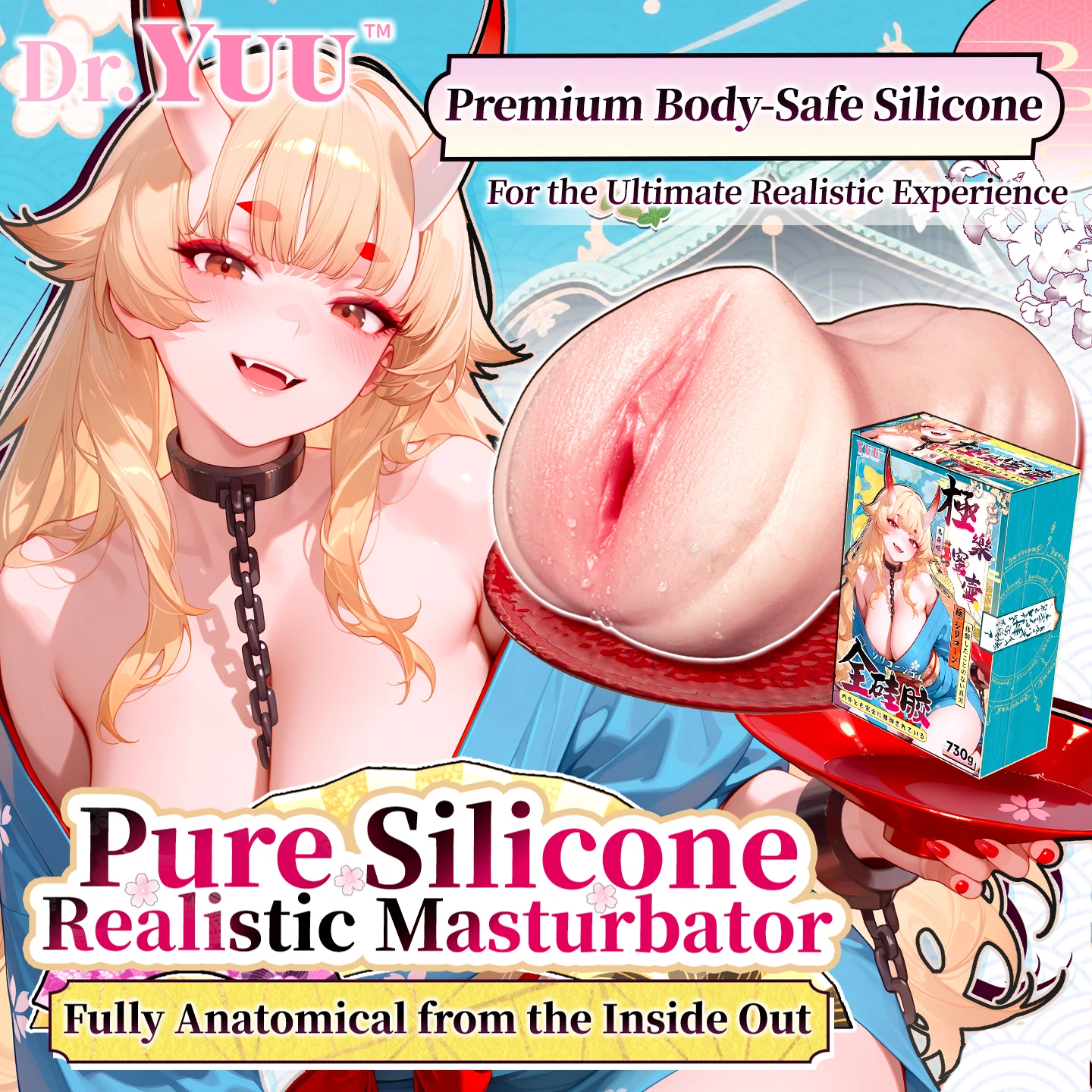
The Dr.YUU Realistic Silicone Masturbator is one finished option to compare. Dr.YUU's product information describes a manual, closed-ended design made from pure silicone, with a curved channel, folded textures, and an end chamber.
| Specification | Listed product information |
|---|---|
| Material | Pure silicone |
| Operation | Manual |
| Construction | Closed-ended |
| Weight | 1.61 lb (730 g) |
| Channel length | About 5.28 in (134 mm) |
| Positioning | Recommended for advanced users |
These details give you concrete comparison points. The model's advanced positioning also matters: it is not a default recommendation for every first-time buyer. Ask about fit and care if the available information does not resolve your needs.
Care for the exact finished product
Follow the manufacturer's cleaning directions after use, then let the product dry completely before storage. For a closed-ended design, include the interior in that routine. Do not assume the sleeve can be turned inside out or treated like a simpler silicone object.
Use only compatible lubricant and cleaning supplies. Water-based lubricant is a starting point when approved for the model. Do not boil, bleach, use alcohol, or machine-wash the product unless its instructions allow that method. Stop using a damaged item or one that causes pain or irritation; seek appropriate professional care if symptoms persist.

Frequently asked questions
Can I use any silicone casting kit?
No. Check the exact system's intended application and documentation. A kit sold for crafts or mold-making does not automatically establish suitability for a finished intimate-contact product.
Does platinum-cure silicone prove the final piece is suitable?
The term identifies part of the material description. You still need information about the complete formulation, processing conditions, finished surface, and intended use.
Is a DIY silicone masturbator cheaper?
There is no single answer. Compare the full cost of materials, molds, supplies, unsuccessful attempts, and evaluation with the cost and maintenance of a finished model.
Can I use silicone-based lubricant?
Use it only when the manufacturer confirms compatibility with the exact product. Ask before use if that information is missing; do not infer compatibility from the material name.
Are anime sex toys always silicone?
No. The theme does not specify the material. Check the listing for each model; do not transfer one product's material or care instructions to another.
Compare the specifications before choosing
Use your preferred dimensions and maintenance routine as a checklist. Browse the Dr.YUU adult toy collection to compare material, weight, construction, and features across finished models.
For supported destinations: free discreet shipping. Secure checkout. For adults 18+.